
BETTER GARDEN
How My Garden Began
(Confessions of a Reluctant, 75-Year-Old Gardener)
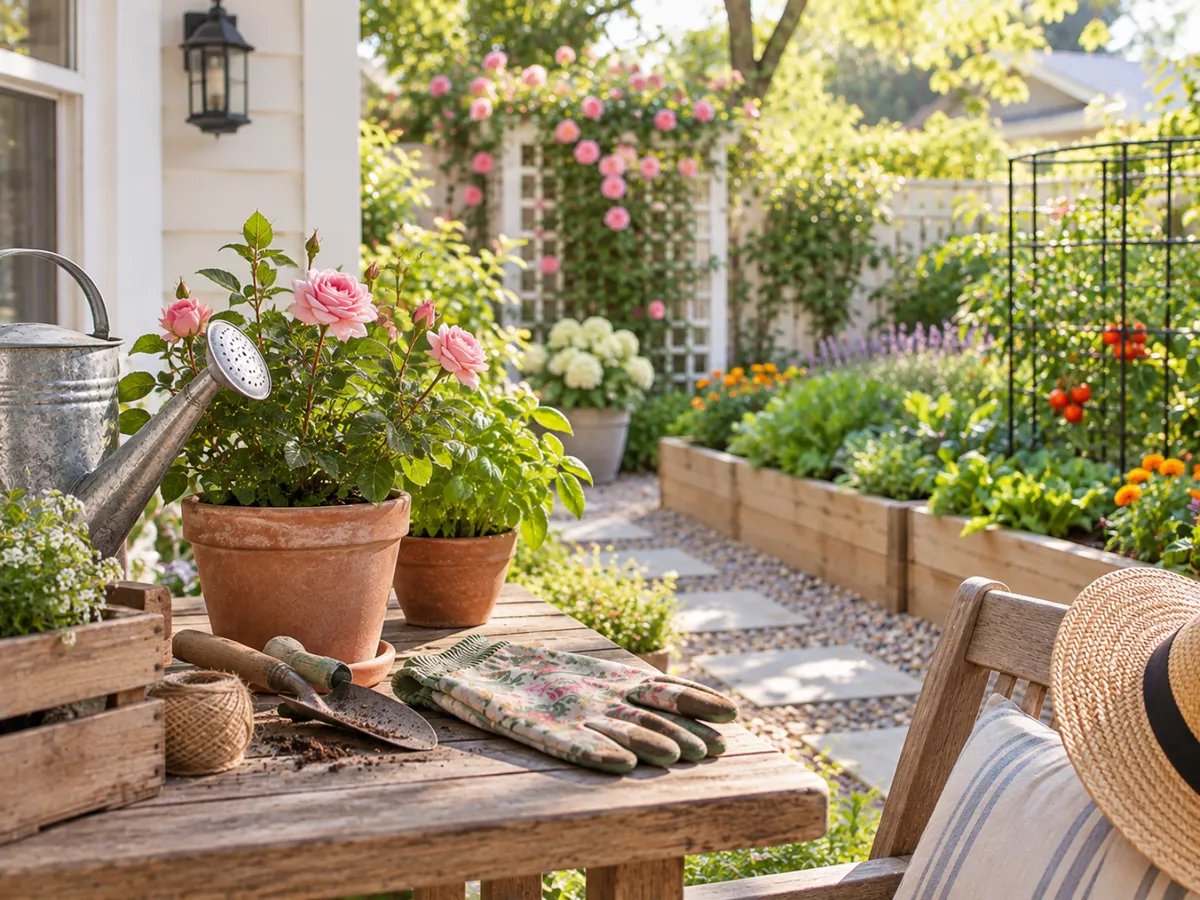
I need to start with a confession: I hate getting my hands dirty. I have what I lovingly call a clean-hand fetish — I wash my hands about five times just making dinner. So if you’d told me a couple of years ago that I’d end up with rose beds, raised vegetable beds, and dirt permanently under my nails, I’d have laughed you off my front porch.
Here’s how it actually happened.
It Started With an Ad I Didn’t Need
I was scrolling through my email one day and saw an ad for roses. I’d never planted a rose in my life, but I had always disliked the hydrangeas the previous owners left along my walkway. So, on a whim, I ordered five rose bushes — short ones, the kind that would form a nice little hedge along the path.
Then I promptly forgot about it all winter.
When spring came, I pulled out every hydrangea and moved them to the shadiest spot in the yard — which, it turns out, is exactly where they should have been all along. The area along the walkway is full sun. I didn’t think twice about that when I planted my roses there in mid-May. Lucky guess: roses love sun. The hydrangeas had never looked right in that spot either, so everyone ended up happier for the move — I just didn’t know that’s what I was doing at the time.
One Thing Led to Another
Once those five roses went in, I caught the bug. I started clearing out more old vegetation and adding roses along the side of the house and the back. Then, naturally, I needed things to go with the roses, so I asked Claude what would pair well and went shopping.
That’s how I ended up with a tray of impatiens I planted in full sun — impatiens need shade, so those got dug up and relocated within the week. Lesson learned the hard way, which seems to be the theme of this whole story.
The salvia, on the other hand, did beautifully, even if it took longer to fill in than I wanted (I want everything to happen instantly, and gardening has been a real lesson in patience). My grandson planted the alyssum border for me, I threw down some black mulch, and along the roses from Heritage I added more salvia, some lavender, and a few carnations for good measure.
Side sleeper
Mattress Considerations
A surface that cushions the shoulders and hips while providing adequate support
Pillow Considerations
Usually a higher-loft pillow to fill the larger space between the head and mattress
Back sleeper
Mattress Considerations
Supportive enough to keep the body comfortably aligned without excessive sinking
Pillow Considerations
Usually medium loft to support the neck without pushing the head too far forward
Stomach sleeper
Mattress Considerations
A firmer surface may help reduce excessive sinking around the midsection
Pillow Considerations
Usually low loft to minimize unnecessary neck elevation
The Planters That Nearly Did Me In
One night on a walk, I spotted three enormous planters someone was throwing out. I walked home, got my car, and — at 75, not long after a shoulder replacement — wrestled all three into the trunk myself. I’m still not sure how.
I spray-painted them black and found homes for them. One sits by my front door, filled with non-flowering plants in different colors and trailing English ivy — it’s genuinely one of my favorite spots in the garden. Another caught the impatiens I’d relocated, tucked by the fence where they finally get the shade they wanted. The third went out front with a simple ivy-and-geranium combination — I can’t take credit for that one, I just bought a hanging basket and plunged it in, but it looks wonderful.
Then Came the Roses (and the Birds)
I wasn’t done. I ordered more rose bushes — some very short, some climbing — and put up trellises for the climbers. What I did not account for was that the trellises had little decorative birds on top, and those birds attracted real birds. Dozens of them. Who, of course, treated my rose leaves like a bathroom. The roses still bloomed beautifully, poop and all, but next year those decorative birds are coming off the trellises before the real ones move in.
Where the Raised Beds Come In
Somewhere in the middle of all this rose chaos, I thought: why not grow some vegetables to help feed the family too? But at 75, I had no interest in kneeling in dirt, so I started researching raised beds.
My first purchase was two modest 3x4 beds. It took about five minutes of actual planting to realize that wasn’t going to be nearly enough space. In those first two beds I put in peas, cucumbers, carrots, beets, and — completely by accident, thinking I was buying more cucumber seeds — zucchini. I also tucked in tarragon, oregano, and lavender, and discovered along the way that lavender and marigolds help deter pests. So marigolds, lavender, and basil went into every single bed after that. That decision paid off, too — I’ve been dehydrating those herbs all winter.
Then I went bigger. I ordered a 4x8 raised bed from Amazon, thinking it couldn’t possibly be that large. It arrived, we assembled it, and it looked like Noah’s Ark had landed in my backyard.
Not wanting to fill the whole thing with soil, I filled the bottom with recycling I’d been saving. Word to the wise: don’t do that. I’ve since learned recycling isn’t good at the base of a garden bed, and it draws more bugs than you’d want. Next year I’m digging it all out and replacing it with branches and wood that will actually break down properly over time.
Once the recycling layer was in, I covered it with cardboard and started adding soil. Ten bags of soil, two bags of manure. Then ten more bags of soil, two more of manure. Then ten more bags of soil and three more of manure. By the end I probably could have added five more bags, but I called it there — another lesson filed away for next year.
Getting It All in the Ground
For the actual planting plan, I told Claude exactly what plants and seeds I had on hand and asked for help mapping out the bed — and it turned out to be a genuinely useful layout. In went carrots, celery, lettuce, broccoli, cauliflower, peas, lavender, basil, dill, and oregano.
The tomatoes and potatoes got their own grow bags. For the potatoes, the garden centre walked me through the method: plant them, then mound dirt over the sprouts as they emerge, again and again, until you reach the top of the bag — then let them grow until the plant dies back, which is your sign the potatoes are ready underneath. Every tomato bag got its own basil and marigold planted alongside, for the same pest-deterring reason as the raised beds.
Then came the hardest part for someone who wants everything to happen instantly: waiting.
I’ll tell you how it all actually turned out — the herbs, the tomatoes, the mysterious fate of those potatoes — in the next post. For now, if you’re thinking about starting your own raised bed garden, just know this: you don’t need to get it right the first time. I certainly didn’t, and I’m still working it out one lesson at a time.
If you’re setting up your own beds this year, I’ll be sharing the tools and grow bags that made the biggest difference for me — keep an eye on this space.
RovingLiving Takeaway
Gardening isn't about perfection or knowing everything on day one. It's about learning through doing, finding joy in small surprises, and discovering that even late starters can grow something wonderful.
Better information. Better choices. Better living.
Continue Exploring RovingLiving
Discover more practical stories, helpful tips, and ideas for creating a better home and everyday life.
Latest Stories
Browse our collection of helpful articles covering home, garden, health, and everyday living.
Better Living
Find practical ideas and inspiration to make your home and everyday life a little better.
RovingLiving
Discovering useful products, practical solutions, and helpful ideas for better everyday living.
Legal & Information
Affiliate Notice: RovingLiving may earn a commission when you purchase through certain links on our website. This does not affect the price you pay. All featured items are curated for practical utility and everyday living.
© 2026 RovingLiving. All rights reserved. Designed for practical everyday discovery.